Valentine’s day in Brazil or Portugal?
 February in Brazil is all about Carnival! Huge parades, parties and general indulgences are the norm for this month in South America´s largest country. So it´s no surprise that Valentine´s Day isn´t really a big thing over there. Actually in Brazil they celebrate their ‘Dia dos Namorados’ (Lovers´s Day) on the 12th June. Celebrations are similar to those in the UK and the US: exchanging chocolates, flowers and having a lovely romantic dinner.
In Portugal however, they do celebrate the 14th February as Saint Valentine´s day. They also celebrate in similar style to those of us in the UK or US by sending chocolates, cards and flowers. Some lucky lovers however take it one step further. It is traditional in Portugal to send women gift baskets full of gourmet goodies and for women to send men similar baskets filled with delightful liqueurs!
So if you have the chance to spend Valentine´s day abroad this year, I know which of the two I would go to!
Just remember that in Brazil you tell your loved one ‘Te Amo’ and in Portugal you tell them ‘Amo-te’!! Just one of the other slight differences between these two historically, linguistically and culturally linked countries!
Colombian Spanish Slang
It´s always fun to learn a bit of slang when you go travelling to a new country! It is a great way to join in with the locals or at least to help follow what they are talking about!
Here is a bit of Colombian Spanish slang to try when you visit this beautiful country.
De una!: Let´s do it!(now!)
Bacano: Cool, awesome
Chévere: Cool awesome
Juepucha: Oh my god!
Que mas?: How are you?
Que hubo? Hello, what´s up?
Parar bolas: To pay attention
Estoy enguayabado: I´m hungover
Que pena!: Sorry
Está mamando gallo: He´s kidding
Se le corrió el champu!: He´s nuts!
Plata: money
La Berraquera: the best
A buñuelo and a pintadito please! (Colombian delicacies)
 After living in Colombia for a few years now I thought it was time to do justice to my dear friend the buñuelo. Too often do empanadas and arepas steal the limlight from the buñuelo but not today!
It is an engrained tradition here in Colombia, particularly in the coffee region where I live to stop at any time of day in one of the many cafeterias in town and order a pintadito or a tinto and a buñuelo and have a good chat about the state of affairs today.
Now a pintadito is the local name for a coffee with plenty of frothy milk, a tinto is not red wine as many people may think when they first cross the border into Colombia, but instead it is a black coffee. A buñuelo is a lovely ball of fried, cheesy corn dough that has been made to a secret recipe: too watery and it explodes, not enough liquid and it will end up like a rock. They are truly delicious and the ritual of watching the world go by over a cup of coffee and a freshly made buñuelo is one of my favourite things about living in this beautiful country.
When you come to visit Colombia, go ahead try the empanadas and the arepas but please don´t forget to have a pintadito and a buñuelo!
Spanish Market Development
 Press, Communication and Marketing
“In 2013, corporations must invest more wisely and strategically in the Hispanic consumer – who are not only early adopters of social media and mobile device use, but are now translating their superstar status into super-consumers via social and tablet shopping. In doing so, Hispanic consumers have become super-trendsetters.” – Glenn Llopis, who wrote the Forbes magazine article, “Advertisers must pay attention to Hispanic consumers as rising trendsetters”, (9th January 2013).
There are 26 Spanish-speaking countries in the world and 469 million speakers. Companies need to make sure their products are understandable for Spanish-speaking consumers and no legal issues may arise for using unsuitable terms or concepts. We can assist in the market research stage and investigate the industry and competitors to help you identify new business opportunities in the Spanish-speaking world. Continue reading
Medellin, Colombia, the most innovative city in the world
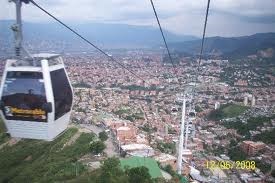 Medellin is known by its residents as the ‘City of Eternal Spring’ due to its warm weather and cool nights all year round. Now maybe they will add on to that description the fact that it is also currently the world’s most innovative city. Continue reading
Interesting interview: an insight into working with the Guatemalan Fire/Rescue Service (Bomberos)

Guatemalan Volunteer Bomberos
People learn Spanish for a wide variety of reasons; they have property in Spain, for holidays/emigrating or they work with Spanish companies. However, I recently helped a local paramedic, Cameron Wyatt, who had a different reason for learning Spanish – he was preparing for a trip to Guatemala City to work with the Guatemalan Fire Service. I recently interviewed Cameron to find out what to expect from a visit to Guatemala and how to prepare for such a trip. It sounds like a real eye opener! Continue reading
How do Spanish accents vary throughout the Spanish-speaking world?
Travelling around the world is one of the most common reasons for learning a foreign language, and today we will take a look at a few different Spanish accents from different countries.
Spanish is one of the most widely spoken languages in the world with about 400 million native speakers according to Wikipedia (See details here).
Although the Spanish language originally came from Spain, over the course of time several variations have developed around the world.
It is important to keep in mind that different variations of Spanish share similar grammar structures. The main differences can be found in pronunciation and regional words. Continue reading
Useful Spanish phrases for your next visit to Mexico City (Nice photos included!)
Hola, my name is José Lira, I live in Monterrey, México and this is my first guest post here at Viva Language Services (and I am very happy about that!). I was born in México but my accent (and thus my writing) leans toward American English because I lived there for some time, so please pardon any “English sacrileges” I might throw your way. Let’s just have fun and learn some Spanish together!
Today I would like to share a few things that caught my attention last time I visited Mexico City and use those situations to practice a few useful Spanish phrases you might use in a similar scenario. Who knows, you might learn something or you might buy a plane ticket by the end of this post. Let’s get started! Continue reading
The differences between Argentinian Spanish and Castilian Spanish
 When I went to Buenos Aires, Argentina I noticed that there were quite a few differences between Castilian Spanish spoken in Spain and the Spanish spoken in Argentina. This involved the accent and pronunciation as well as the grammar and certain words and phrases. The different accent took a bit of getting used to. Although the “porteños” understood my “Spanish” accent (from Spain), the difficulty arose in my understanding of them. Read on to discover the differences to watch out for. Continue reading
My trip to Buenos Aires: March-May 2011

- 17-lane Avenida 9 de Julio, Centre of Buenos Aires
After throwing myself into my business of teaching Spanish for 2 years and helping many people prepare to move or travel abroad, I decided it was time to take a break, do some travelling and practise the language I love. I chose to visit Buenos Aires, Argentina as I had always wanted to travel to South America and it sounded a fantastic city to visit! Here is my account of what to expect from a trip to Argentina.
Follow Us


