Tips for developing good business practice in Spain
Build successful relationships
Spanish people like doing business with people they know and trust, therefore it is a good idea to spend enough time getting to know and building rapport with your colleagues. This is crucial for good business practice in Spain.
Once you have built up a good relationship with someone, this will continue regardless of whether you stay with their company as they have got to know you as a person rather than the company you work for. Continue reading
How to use “Vaya” in Spanish
The most popular “Vaya” expressions are:
¡Vaya! Oh dear! / Oh my God! / Fancy that!
Vaya, vaya, vaya. Well, well, well.
¡Que te vaya bien! Hope it goes well (used when parting)
¡Vaya con Díos! Good-bye (an old-fashioned way of saying good-bye. Literally “Go with God.”) Continue reading
Eating out: Essential Phrases in Spanish
 el camarero/la camarera: waiter/waitress
la mesa: table
la carta: menu
la cuenta: bill
la propina: tip
el cuchillo: knife
el tenedor: fork
la cuchara: spoon
el vaso: glass
el plato: plate Continue reading
10 ways to become fluent fast when living abroad
Maybe you are a university student preparing for your year abroad. Perhaps you are going abroad to work or study for a few  months. Even if you know enough basics to get by, it can still be daunting. From my own experiences as well as ideas from current and ex-clients here are a few tips for becoming fluent quickly. Continue reading
A tricky Spanish verb: Quedar
Quedar is a difficult verb to learn in Spanish as it has different meanings depending on the context in which it is used.  Here are the most common ways it can be used:
When used reflexively with “se”: (1) Quedarse = To stay
Me quedé en un hotel en Madrid. I stayed in a hotel in Madrid.
Nos quedamos aquí. We’ll stay here. Continue reading
Interactive Spanish Picture Dictionary
Learn words quickly and easily with an interactive Spanish Picture Dictionary.

 Although a standard Spanish-English dictionary is an invaluable resource, by combining the word with an image it is a much more effective way to learn and retain key vocabulary.
From client feedback it was clear that they needed a more useful method to learn words rather than just memorising word lists. As a result, I created an interactive Spanish Picture Dictionary with Powerpoint. It is organised into 20 key topic areas including over 800 slides. Continue reading
Hone your bargaining skills in Spanish
Let’s face it, who doesn’t like a bargain? Haggling with native market sellers is the ideal opportunity to practise your Spanish with the  locals. After recently using my Spanish haggling skills successfully(!) when buying souvenirs in Buenos Aires, here are my top tips for getting the best items at the best price at any Spanish-speaking market.
Top Tip: Arrive early! Stall holders usually want to make a quick sale to kick start their day, so will be eager to sell at any price if you go first thing.
Popular Spanish Sayings (refranes)
After collaborating with Spanish friends, we have come up with a list of the top sayings (refranes) used every day in Spain today.
1. Cuando las ranas críen pelos. (Lit. When frogs grow hair.)
English equivalent: When pigs might fly. / When hell freezes over.
2. A quien madruga, Dios le ayuda. (Lit. God helps the one who rises early.)
English equivalent: The early bird catches the worm.
3. No hay que empezar la casa por el tejado. (Lit. You mustn’t start the house before the roof.)
English equivalent: Don’t put the cart before the horse. Continue reading
20 Brilliant ways to improve your Spanish!
 Are you looking for more interesting and fun ways to improve your Spanish that do not take much time or effort? The following ideas from learners will inspire you and keep you motivated. As there are so many options available, I would suggest trying one idea at a time so that you don’t become completely overwhelmed. Continue reading
 10 Great reasons to learn Spanish
1. Spanish is spoken everywhere!
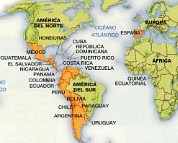 There are over 330 million native Spanish speakers in the world and Spanish is the most widely spoken language after Mandarin Chinese and English. This is only likely to grow over the next few decades. Spanish is spoken in more countries than French and German; most of South America, Spain, parts of the US, Equatorial Guinea, the Philippines and even parts of Antarctica. Continue reading
Follow Us


