How to make a complaint in Spanish at your hotel.
Hearing about people’s experiences in foreign hotels and after having faced problems when staying in hotels abroad myself, I thought this would be a good article for people learning Spanish, leading up to the peak holiday period. Read on to learn some key expressions which may just help you out on your next holiday in a Spanish-speaking country: Continue reading
Huevos con chorizo, pan y guisantes. / Eggs with chorizo, bread and peas (Recipe in Spanish & English)
 4 raciones: 4 servings
Ingredientes: (Ingredients)
100 gramos guisantes congelados: 100g frozen peas
2 cucharadas de vinagre de vino blanco: 2 tbsp white wine vinegar
1 cucharada de aceite de oliva: 1 tbsp olive oil
100 g de chorizo pelado y desmenuzado en trocitos: 100g chorizo, skinned and crumbled into small pieces
4 rebanadas gruesas de pan de chapata, sin corteza y divididas en trocitos: 4 thick slices ciabatta, crust removed and torn into small pieces
4 huevos: 4 eggs
Puñado pequeño de brotes de guisantes (opcional): Small handful pea shoots (optional)
Sal de mar gruesa: coarse sea salt Continue reading
How to use the verb “llevar” in Spanish
The verb “llevar” in Spanish can be quite confusing for learners as it means different things in different contexts. It can also be used with a reflexive pronoun in which case the meaning changes again. Generally it means “to take” but here we will look at the other ways it can be a very useful verb to learn how to use. Continue reading
10 easy & fun ways to build Spanish into your everyday life – perfect for busy people!
If you have decided to learn or brush up on your Spanish before next year’s holiday but are now wondering how you are going to find the time to do this, here are some ideas for easy, enjoyable ways to use the language every day. Ok, so you don’t have time to sit over a Spanish grammar book for 2 hours a day, no problem, there are many other ways to learn a language which are much more enjoyable: Continue reading
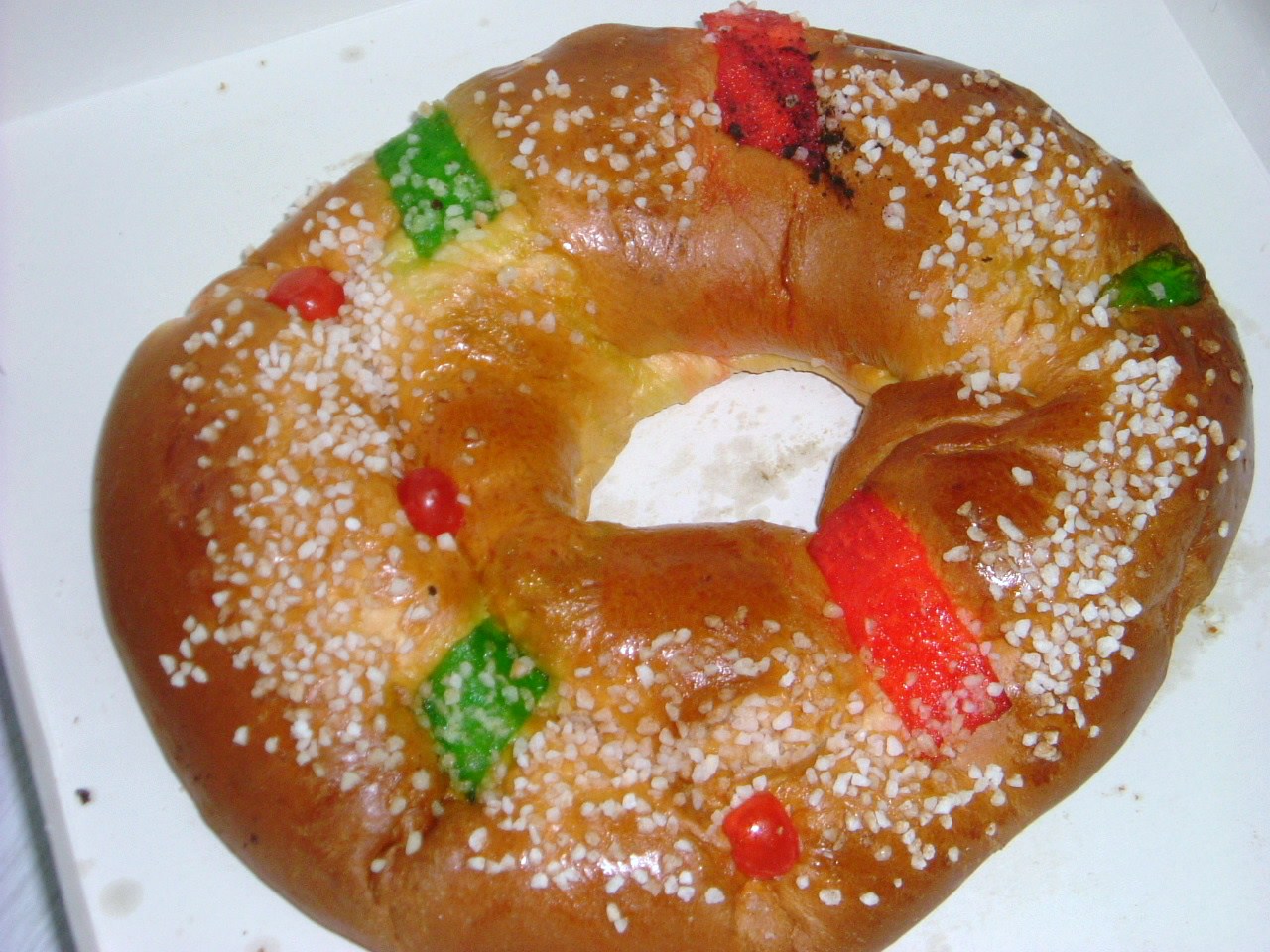
Receta para “Roscón de Reyes”: Recipe for “King’s Cake”
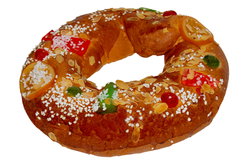 What is a “Roscón de Reyes”?
The “Roscón de Reyes” (King’s Cake) is a doughnut shaped cake topped with sugared fruits and sprinkled with sugar. It is traditional to eat it on “El Día de Reyes” – The King’s Day, (Epiphany, 6th January). The “King’s Day” is when Spanish children receive presents from the “Reyes Magos” (the Wise Men – the 3 Kings who brought baby Jesus gifts). It is traditional to put surprise figures inside the roscón and whoever finds them in their portion will have good luck the following year and will be the king of the party. However, you also put in a dry bean, “una haba” and whoever finds this has to pay for the cake.
Here is a simple recipe to make your own “Roscón de Reyes” (King’s Cake): Continue reading
Why should children start learning languages early?
Many adults wish they had started learning a language as a child when their brains were more able to absorb new information. Scientific research has proven that when we are young our brains are programmed to picking up new languages more easily. Babies and children are like sponges and absorb everything they see and hear around them. Read on to see why the earlier we introduce children to a foreign language, the better. Continue reading
Christmas and New Year greetings in Spanish
 In this article we will learn some Spanish greetings that you can say to your Spanish friends and relatives or that you can write in Christmas cards. We will start with the more simple expressions and then look at some more complex structures for more advanced learners of Spanish. (Don’t forget the upside down exclamation mark at the beginning!) Continue reading
Filler words in Spanish (muletillas) – sound like a native speaker, not a textbook!
In English we have many filler words that we use to give ourselves time to think about what we are going to say next, such as; err, well, hmmm, like, you know etc. Particularly when you are learning to speak a foreign language like Spanish you start a sentence and then halfway you get stuck as to what to say next and you need a few seconds to think. It is here that these “filler words” come in handy. In Spanish, “filler” words are known as “muletillas” or “palabras de relleno”. If you can learn a few of these words they will not only make you to sound more natural and therefore more like a native speaker, but they can also give you time to think about how to word what you want to say next. Read on to learn the key “filler words” (“muletillas”) in Spanish and sound like a true Spaniard!: Continue reading
All children from seven are to learn languages from 2014
Here at Viva Languages we are really excited about the announcement this year by Michael Gove, the Education Secretary, that all children from the age of seven are to be taught a foreign language from 2014. This is welcome news since according to recent official figures one in ten state primary schools do not offer any language lessons and a further 20 per cent only offer it to some year groups. Continue reading
How to use the verb “quedar” in Spanish.
“Quedar” is another one of those verbs in Spanish that causes confusion because it has many different meanings depending on the context. Here we will look at the most common ways “quedar” can be used in everyday conversation.
To be left over:
No me quedan. – I don’t have any left.
No quedan ningunas entradas. – There are no tickets left.
¿Queda leche? – Is there any milk left? Continue reading
Follow Us