How to say what you “have done” in Spanish
 The Perfect Tense

In Spanish to talk about what you have done recently or things you “have done” you would use what is called the “perfect tense”. Luckily it is one of the easier tenses to learn. In this blog post we will look at how to form this tense and the irregular verbs.
There are two parts to this tense: Continue reading
50+ Conversation Starters in Spanish
 Meeting Spanish people for the first time is a great opportunity to practise your Spanish. You probably already know the usual greetings and basic questions when you first meet someone, but it is good to be able to ask more in-depth questions to get to know someone better. In this blog post there are questions on various topics to help you go beyond ¿De dónde eres? (Where are you from?): Continue reading
Irregular Future Tense verbs in Spanish
 The two good things about the future tense in Spanish is that:
i) there is only a small group of irregular verbs to learn
ii) They still have the same endings as the regular verbs so you only need to remember the stem Continue reading
Future tense in Spanish
 If you want to talk about what you are going to do tomorrow, next week, next month or next year you will need to know how to use the future tense. There are two ways of expressing future actions in Spanish:
- Immediate future – for things that are already planned, are definitely going to happen and you know when. “Going to …”
- General future tense – for things further in the future but often there is no specific time in mind. “Will / shall …”
You will be pleased to know that neither of the two future tenses are too difficult to learn! Continue reading
Breakfast in Spain
 Desayuno en España

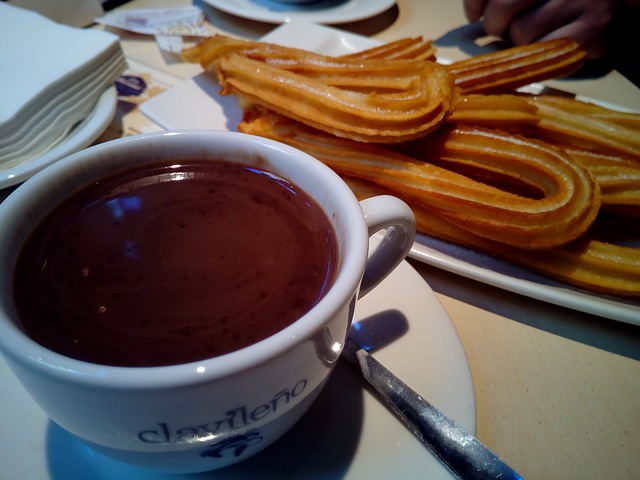
In Spain breakfast (desayuno) is almost the most important meal of the day and they do not hurry over it! Coffee is perhaps the most important part of it. You will find though that their coffee is much smaller than in the UK with the “cortado” (small cup of coffee with a drop of milk) being the most typical. Typical foods include galletas (biscuits), tortilla (potato omelette) and pan tostado (toast).
Here are the most traditional foods and drinks you will find in Spain for breakfast: Continue reading
Pedir v Preguntar
 Both of these verbs in Spanish mean “to ask” but you would use each one in different situations. In this blog post we will explain when to use them.
Pedir:
To ask for something / to request something / to order a service or an item
e.g. Voy a pedir los postres ahora. I am going to order the desserts now.
e.g. Pedimos que vuelvan enseguida. We ask them to return straightaway.
e.g. Pido la carne bien hecha. I order the meat well done. Continue reading
14 Spanish words related with technology
 Here are some of the most useful words in Spanish related with technology and computers used nowadays! Continue reading
Learn Spanish with music!
Despacito – Justin Bieber, Luis Fonsi & Daddy Yankee
An easy and fun way to improve your language skills is by listening to songs. Here is the huge summer hit by Luis Fonsi and Daddy Yankee which Justin Bieber has released a new version of, meaning that it is heard in not just Spanish-speaking countries but English-speaking ones too. It is very catchy and proves that it seems like everyone is learning Spanish these days! Watch the video below and follow the Spanish section’s lyrics that have been translated into English: Continue reading
15 Spanish expressions using animals
 The Spanish language is full of idiomatic expressions that are used in everyday conversation. When you chat with native-speaking people it can really help you keep up with what they are saying if you can learn some of the most common ones. Here we are going to focus on popular idioms using animals. Some are similar to ones we use in English but others do not exist in English at all:
1) Estar como una cabra – To be completely mad Continue reading
Spanish idioms using parts of the body
1) Estoy hasta las narices de alguien – I have had enough of someone
(Literally: Up to the nose of someone)
2) Ser uña y carne = To be really close to someone
(Literally: To be nail and flesh)
3) Tener mucha cara = To be really cheeky / be shameless
(Literally: To have a lot of face) Continue reading
Follow Us