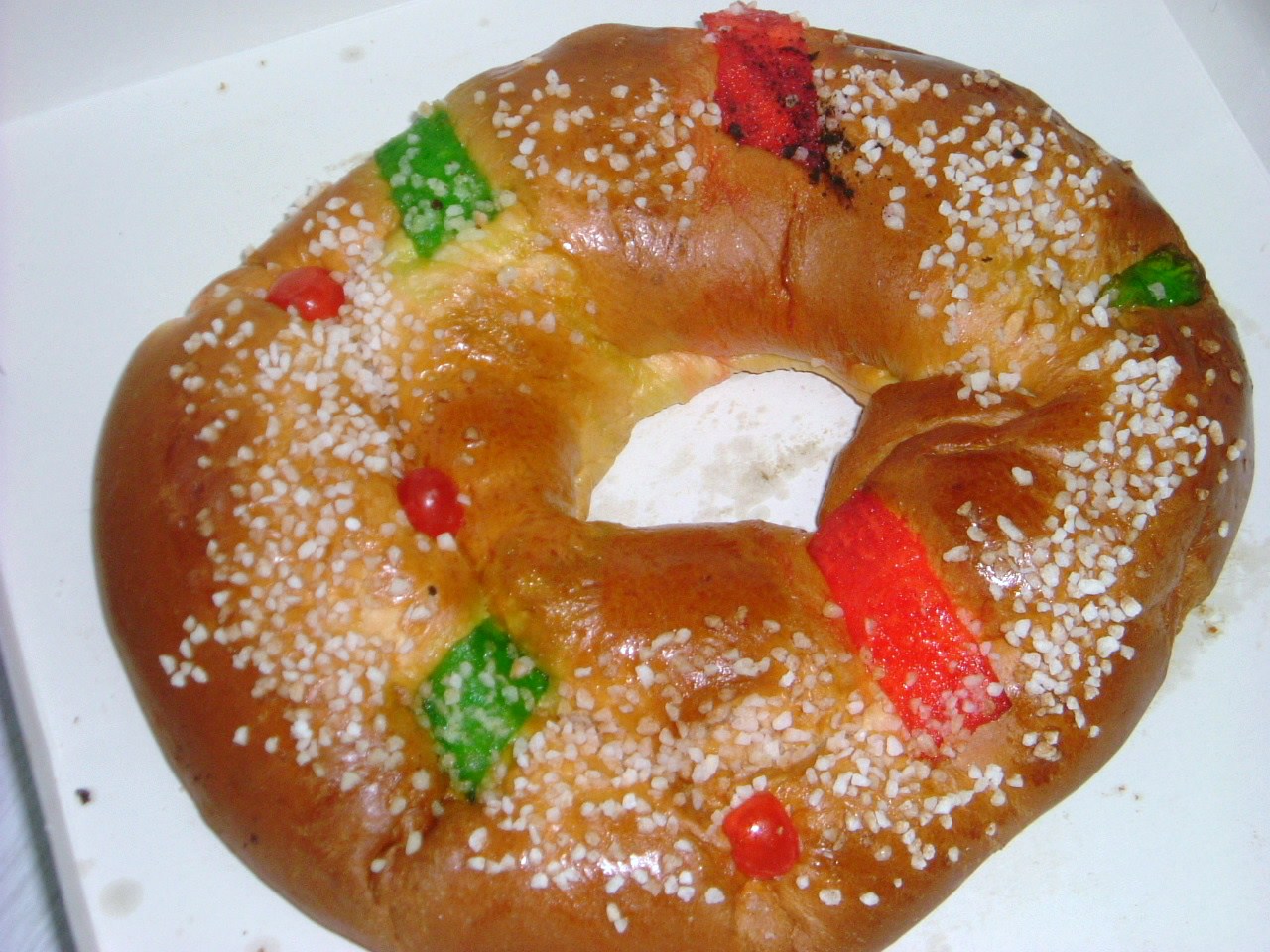
Receta para “Roscón de Reyes”: Recipe for “King’s Cake”
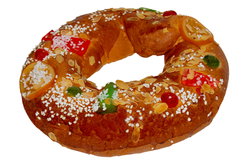 What is a “Roscón de Reyes”?
The “Roscón de Reyes” (King’s Cake) is a doughnut shaped cake topped with sugared fruits and sprinkled with sugar. It is traditional to eat it on “El Día de Reyes” – The King’s Day, (Epiphany, 6th January). The “King’s Day” is when Spanish children receive presents from the “Reyes Magos” (the Wise Men – the 3 Kings who brought baby Jesus gifts). It is traditional to put surprise figures inside the roscón and whoever finds them in their portion will have good luck the following year and will be the king of the party. However, you also put in a dry bean, “una haba” and whoever finds this has to pay for the cake.
Here is a simple recipe to make your own “Roscón de Reyes” (King’s Cake): Continue reading
Christmas and New Year greetings in Spanish
 In this article we will learn some Spanish greetings that you can say to your Spanish friends and relatives or that you can write in Christmas cards. We will start with the more simple expressions and then look at some more complex structures for more advanced learners of Spanish. (Don’t forget the upside down exclamation mark at the beginning!) Continue reading
Learn Spanish and earn money at the same time – become an Aupair in Spain!
 One of the best ways to learn a language and to become fluent quickly is to live and work in the country for a few months or even a few years. A popular way to do this for many young people is to work as an Aupair for a host-family. This is a cultural exchange which allows you to improve the language and learn about the culture from living with native speakers as well as earning money at the same time. In this article we will look at how one specialist Aupair agency in Spain works – “Family & Aupair”. Continue reading
Why do Spanish people have two surnames?
You have probably noticed that in countries where Spanish is spoken, native Spanish people have about four different names and you may have wondered why this is. The custom of having more than one surname originates from the Arabic influence in Spain between 711 and 1492 AD. It may seem a complicated way of naming and there are variations as to how it works but basically the rule is simple: Continue reading
Feliz Día del Padre (Happy Father’s Day)
Hoy tengo que decirte Papá (Today I have to tell you Dad)
Listen to the Spanish Father’s Day song, “Hoy tengo que decirte Papá” on YouTube
Hoy tengo que decirte Papá / Today I have to tell you Dad,
El tiempo nada cambiará / Time won’t change anything
Estaremos siempre juntos / We will always be together
Todo el tiempo sin parar. / All the time, without stopping. Continue reading
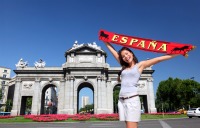
Top 5 cities to visit in Spain
 1. Barcelona
2. Granada
3. Valencia
4. Madrid
5. Sevilla Continue reading
How is Christmas celebrated in Spain?
 Having spent several Christmases and New Years in Spain, the first thing I noticed is that the celebrations are much more traditional and religious compared to the more commercialised Christmases in England and the US. Spanish people are more family oriented so there is a greater emphasis on spending time with the family and less on present giving and materialism. The celebrations last longer too, (almost a month!) as they also celebrate “Los Reyes” (The King’s Day) on 6th January. Here is what to expect from a typical Spanish Christmas: Continue reading
Spanish eating customs
 Spanish people adore their food and you often hear them discussing recipes, ingredients and meals they have recently eaten or prepared. For Spanish people, eating is a social occasion, not just to conquer hunger. Their mealtimes differ to ours, largely due to the climate and their working hours. Here is a description of the various meals that exist in a typical day for a Spaniard: Continue reading
How is Halloween celebrated in Spain? (El Día de las Brujas / La Noche de los Muertos)
 Any excuse for a fiesta in Spain, and Halloween is by no means an exception. After spending an unforgettable weekend in Madrid during the Halloween celebrations a few years ago here is my account of how Halloween is celebrated in Spain. Continue reading
A highlight of my trip to Spain – exciting bull running competition!
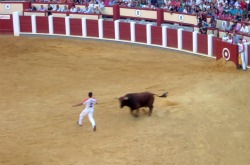 After having been to several bullfights in the past, which I think are cruel, I was much more enthusiastic about being invited to see a “Concurso de Cortes” which is much less cruel for the bull and so much more exciting to watch. The bull is not killed or harmed during a Cortes competition. Even anti bull fighting groups do not oppose them. I spent the entire three hours literally on the edge of my seat and if you read on, you will understand why! Continue reading
Follow Us