“Ser” and “Estar” with adjectives – can totally change your meaning!
With certain adjectives, your meaning can completely change, depending on whether you use “ser” (the permanent verb for “to be”) or “estar” (the temporary verb for “to be”). Here is a list of the adjectives to watch out for to avoid confusion or embarrassment! Continue reading
Ser and Estar simplified!
Many of my students, including the more advanced learners, struggle with the two verbs meaning “to be” in Spanish and when to use each one. The topic of “Ser versus Estar” is clearly difficult given that whole chapters and even books have been written on the subject! Ser and Estar is a tricky matter especially considering that even Spanish people argue amongst themselves as to which verb should be used in certain contexts. Here are the main uses of each verb: Continue reading
Para or Por?
 This is one of the tricky areas of Spanish grammar which confuses most people! The reason being is that both can mean “for”, however they can mean different things in different contexts. I will outline below the key uses of “para” and “por” with examples to help you remember when to use each one: Continue reading
Question words in Spanish
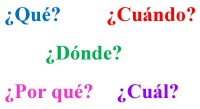 People often confuse the question words in Spanish, so here is a quick reminder of the most important ones to remember. Don’t forget that in Spanish they also include an upside down question mark at the beginning of the question – ¿ – and all question words have an accent.
¿Bien o Bueno?
I am often asked this question by learners, so read on for my explanation to make it simple: Continue reading
Interesting Spanish: Compound Words (2 words in 1)
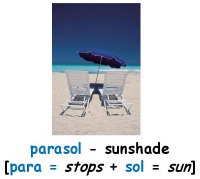 Compound words, “palabras compuestas” are two separate words joined together to create a single word.
For example: parasol (sunshade) is formed from: para (it stops) + sol (sun) [it stops sun]
Often they are created for humour and many do not survive over time.
Here is a list of the most interesting and commonly used in Spanish today: Continue reading
Watch out for “False Friends” in Spanish!
 In Spanish there are many false cognates – words that look the same as an English word but they have a completely different meaning. This can be confusing and may lead to misunderstanding. Here are the most commonly used “false friends” to watch out for.
1. actual in Spanish means current/present. (To say “actual” in Spanish, use real / verdadero)
2. asistir = to attend NOT to assist (ayudar)
3. atender = to take care of/attend to NOT to attend (asistir)
4. bizarro = brave NOT bizarre/strange (raro / extraño) Continue reading
How to use “Vaya” in Spanish
The most popular “Vaya” expressions are:
¡Vaya! Oh dear! / Oh my God! / Fancy that!
Vaya, vaya, vaya. Well, well, well.
¡Que te vaya bien! Hope it goes well (used when parting)
¡Vaya con Díos! Good-bye (an old-fashioned way of saying good-bye. Literally “Go with God.”) Continue reading
A tricky Spanish verb: Quedar
Quedar is a difficult verb to learn in Spanish as it has different meanings depending on the context in which it is used.  Here are the most common ways it can be used:
When used reflexively with “se”: (1) Quedarse = To stay
Me quedé en un hotel en Madrid. I stayed in a hotel in Madrid.
Nos quedamos aquí. We’ll stay here. Continue reading
Follow Us


