A-level listening exam tips
 Language listening exams can be the most nerve-racking of all for many students. Here are a few tips to help you tackle the listening exam and how to achieve the best mark possible.
Ideas for Spanish teachers: How to use Pixacat, viral photos and social media to help students learn Spanish
Finding creative ways to encourage young Spanish students to practice the language throughout the day can be as easy as realizing that most of them love two things unconditionally: funny photos and social media. So, why not use these common “distractions” to encourage students to practice a language more often?
This article will review three ideas of how to bring the power of social media and interactive learning into Spanish classrooms using Pixacat, a free photo app for the iPhone to edit cat photos that may also be an ally for Spanish teachers. Continue reading
10 tips for teaching languages to dyslexic learners
Over the past ten years I’ve taught several students who have been dyslexic. Although learning a language is challenging for everyone, it can be particularly daunting for people with a learning disability. However, if you adapt general language learning techniques it has been proven that even those with dyslexia can learn to communicate effectively in another language.
Here are some tips for helping people with dyslexia learn a language: Continue reading
How can I help my child learn a foreign language?
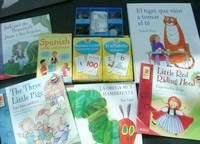 Maybe you are planning a holiday in a foreign country or perhaps you have family or friends living abroad and want to learn the language to communicate easily. You may think that because you aren’t fluent in a language you won’t be able to teach your child, however, it isn’t difficult to learn a few of the basics as you go along. Besides, learning about another language and culture together is an excellent way to spend quality time as a family.
Read on for tips on helping your and your child learn another language. Find links to the best language learning resources available today.
Continue reading
10 easy & fun ways to build Spanish into your everyday life – perfect for busy people!
If you have decided to learn or brush up on your Spanish before next year’s holiday but are now wondering how you are going to find the time to do this, here are some ideas for easy, enjoyable ways to use the language every day. Ok, so you don’t have time to sit over a Spanish grammar book for 2 hours a day, no problem, there are many other ways to learn a language which are much more enjoyable: Continue reading
Filler words in Spanish (muletillas) – sound like a native speaker, not a textbook!
In English we have many filler words that we use to give ourselves time to think about what we are going to say next, such as; err, well, hmmm, like, you know etc. Particularly when you are learning to speak a foreign language like Spanish you start a sentence and then halfway you get stuck as to what to say next and you need a few seconds to think. It is here that these “filler words” come in handy. In Spanish, “filler” words are known as “muletillas” or “palabras de relleno”. If you can learn a few of these words they will not only make you to sound more natural and therefore more like a native speaker, but they can also give you time to think about how to word what you want to say next. Read on to learn the key “filler words” (“muletillas”) in Spanish and sound like a true Spaniard!: Continue reading
Learn Spanish and earn money at the same time – become an Aupair in Spain!
 One of the best ways to learn a language and to become fluent quickly is to live and work in the country for a few months or even a few years. A popular way to do this for many young people is to work as an Aupair for a host-family. This is a cultural exchange which allows you to improve the language and learn about the culture from living with native speakers as well as earning money at the same time. In this article we will look at how one specialist Aupair agency in Spain works – “Family & Aupair”. Continue reading
6 tips to boost your memory and learn new words fast!
Here are my top tips for learning and retaining words in another language and some proven ways to boost your memory:
1) Learn with pictures. Instead of learning endless lists of vocabulary, make you own picture dictionary. Seeing the word with an image will definitely help you to remember it for longer. Label household items and rooms in the house (as long as this doesn’t annoy the people you live with!) Continue reading
How NOT to learn Spanish! – 10 tips
1. Don’t rely on online translators. They are good for quick translations of words and expressions but don’t expect to type in a whole paragraph in English and have it translated into perfect Spanish. Online translators cannot understand the context. For example, in Spanish to say “What is Madrid like?” the correct translation is “¿Cómo es Madrid?” [Literally “How is Madrid?”] but if you put this into an online translator it comes out as “¿Lo que se desea Madrid?” – incorrect. [Literally, “What does Madrid like?”] Continue reading
Tips on helping your child learn a foreign language
Why should my child learn another language?
Research shows that children who speak another language perform better across all academic subjects. They are more confident, creative, have better problem-solving skills and more cultural awareness – invaluable in today’s multicultural society. School leavers with knowledge of foreign languages stand much better chances of getting better jobs as today’s global marketplace means multilingual staff are in great demand. Continue reading
Follow Us


